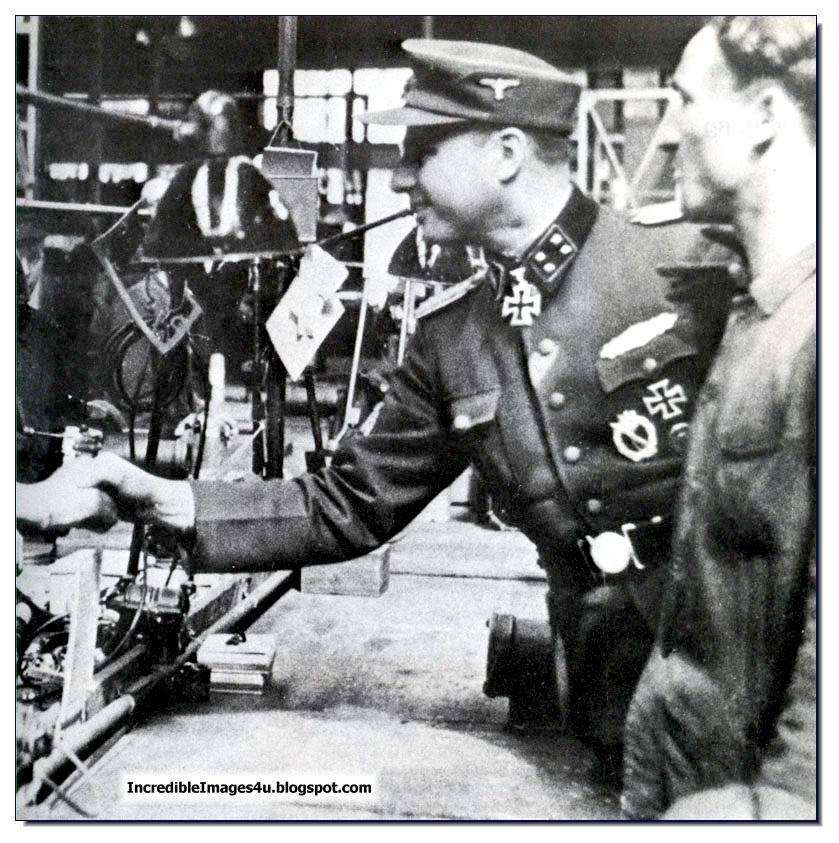
26th Waffen Grenadier Division of the SS Hungary (Hungarian No.2)
Formation in March 1945 ordered. never really completed, existed only on paper. 3 weak motorized infantry regiments
SS Panzer Brigade 49 never fully established, existed only on paper. Existed as a fighting unit only on paper.
27th SS Volunteer Grenadier Division Langemarck (Flemish No.1)
Legion reorganized in May 1943 as a brigade and designated September 1944 as a division.
Survivors went on 5 May 1945 in British prisoner of war in Schleswig-Holstein .
1943, 2, 1944 with 3, 1945 with 1 motorized infantry regiment. 1943/44 with 14 StuG III and StuG IV , 10 Marder self-propelled anti-tank guns. 24 tanks. 1945 a total of 10 tank destroyer Hetzer .
Some Flemish and Finnish volunteers. Almost completely destroyed at the Oder front in April and May 1945.
28th SS Volunteer Panzer Grenadier Division Wallonia
Walloon Legion formed in June 1943. Was designated Waffen-SS a division in October 1944 .
Organised by Degrelle.Iin late April 1945 evacuated from the eastern front to Denmark. Later came to British war captivity.
(Also French, Belgian and Spanish volunteers) 1 motorized infantry regiment.1943 with 10 StuG III and StuG IV, 12 Marder self-propelled anti-tank guns. 22 tanks.
Summer 1944: 14 StuG IV, 4 StuH 10.5 cm. 18 tanks. 1945 a total of 10 Jagdpanzer IV
Diie Walloon Brigade was formed in January 1944 with 2,000 men strong . Wallonne and later Belgian volunteers under the command of Leon Degrelle. After the war he fled to Norway then to Spain, where he led a public life for years. Highest combat performance.
29th Waffen Grenadier Division of the SS (Russian # 1)
'Band' under Bratislaw Kaminski, became Waffen-SS in 1943. Later referred to as 'Division'.
After the withdrawal from the Warsaw Uprising (August 1944), Kaminski was shot dead under mysterious circumstances and his 'Division' dissolved. The Waffen-SS no. 29 was adopted by the Italian No.1 (see next division).
Band of 6,500 men with captured Soviet artillery. Some captured Soviet armored vehicles.
Mostly Ukrainians, wide spread war crimes behind the Central Army Group. During the Warsaw Uprising murdered 10,000 Polish civilians in a day and were withdrawn.
29th Waffen Grenadier Division of the SS
(Italian No. 1)
Became the Waffen-SS in September 1944.
Details are not known. The sub-units were used widely scattered.
Operations against partisans in Italy, some clashes with coalition forces.
30th Waffen Grenadier Division of the SS
(Russian No.2)
Formed in July 1944. Became a division of the Waffen-SS in August 1944.
Dissolved and survivors transferred in November 1944 to Vlasov Army ROA .
3 infantry regiments (October 1944).
Consisted of breakaway Russian security forces. Security duties in eastern France, a few skirmishes with allied forces.
31st SS Volunteer Grenadier Division of Bohemia and Moravia
Situated in Hungary and Slovakia in October 1944.
Destroyed in Hradec Kralove (Czech Republic) in May 1945 (well below divisional strength)
Mix of foreigners and ethnic Germans, some officers and NCOs of the former 23rd Waffen Mountain Division. Kama .
32nd SS Volunteer Grenadier Division 30 January
Was formed in January 1945 from what remained of other units and staff and pupils from SS schools and various other troops. The title of the division comes from the date when Adolf Hitler became the chancellor of Germany on 30 January 1933.
Heavy casualties, only 150 survivors reached the Western Allied as prisoners of war at Tangermünde in May 1945.
3 partially motorized infantry regiments (each with only 2 battalions), 1 Fusilier Battalion. Assault Gun Division with 22 Hetzer. 22 tanks.
Initially, only a battle group of stragglers of various units and soldiers and recruits from various SS Ausbilldungsschulen for formed for immediate use at Frankfurt / Oder. Then expanded to Division.
33rd Waffen Cavalry Division of the SS
(Hungarian No.3)
Formed in 1944/45 Hungary.
Destroyed in Budapest in February 1945. (well below divisional strength)
Hastily put together, largely Hungarian cavalry unit.
33rd Waffen Grenadier Division of the SS Charlemagne
(French No 1)
The French Volunteer Legion became the Waffen-SS in August 1943. On 10 February 1945 was made a Division.
Parts were evacuated in March 1945 from the fortress Kolberg after Wolin . A battle group defended the government district , where it was destroyed.
1 motorized infantry regiment (with 3 battalions), 1945 a second Infantry Regiment (originally the 638th French Regiment). Pak-self-propelled guns were in the anti-tank company.
Made up of French volunteers and other Western European nations. Also included former French Foreign Legionnaires.
High combat performance.
34th SS Grenadier Division Country Storm Nederland
(Dutch)
Established in spring 1943 in the Netherlands, transferred to the Waffen-SS in September 1944 .
Capitulated in May 1945 against the British.
2 infantry regiments (never reached divisional strength).
Originally formed as a backup unit with Dutch volunteers and German police officers.
Combat mission in Arnhem, later operations against resistance groups in Holland.
35th SS Police Grenadier Division
Founded in February 1945.
Surrendered to the Red Army in Halbe , May 1945.
3 police, infantry regiments.
Made up of staff from the police training school in Dresden and the SS Junker School Brunswick for use on the Neisse front.
36th Waffen Grenadier Division of the SS
Formed in 1940 as a weak Battalion (Criminal Unit). Between 1942-1944 constantly expanded to brigade-size and ultimately called Division.
The unit was massacred by the Red Army on 29 April 1945 south-east of Berlin. Its longtime commander Dirlewanger (wounded in February 1945) mysteriously died in prison in June 1945.
About 4,000 'butcher' in summer 1944.
Commander Dirlewanger was incarcerated for sex crimes before the war. The staff was recruited from German prisons, concentration camps, SS military prisons and other human "cesspools". Scandalous war crimes , but Dirlewanger, who was personally involved in the terrible atrocities, was Himmler favourite.
37th SS Volunteer Cavalry Division Lützow
Formed in Bratislava in February and March 1945.
Surrendered to the U.S. Army in Austria.
2 cavalry regiments
Formed after the fall of Budapest from the survivors of the eighth and 22nd SS cavalry divisions and other stragglers, including Hungary Hoved Division.
High combat performance since March 1945.
38th SS Grenadier Division Nibelungen
Formed on 28 March 1945 in Freiburg. The Division was still being prepared when it was forced to retire to Bavaria.
13th Waffen Mountain Division of the SS Handschar (Croatian Nr.1)
Formed in July 1943 (Ready to deploy in March 1944.) Dissolved in October 1944 due to many desertions in the face of advancing Red Army.
2 mountain infantry regiments.
Recruited from the Bosnian Muslims, the traditional enemies of the Christian Serbs who made up the majority of Tito's partisans. Mutinies during training in France, and later many war crimes.
14th Waffen Grenadier Division of the SS
(Galician, later Ukrainian No.1) April 1943 (ready in June 1944)
Surrendered to the British in the Steiermark , May 1945. Delivered to the Russians.
Some of the men escaped from Tarnopol (July 1944. Remnants fought in the winter of 1946/47 in the Carpathian Mountains.
3 infantry regiments
Total strength 30,000 men recruited from Ukrainians in occupied Ukraine with German officers.
15th Waffen Grenadier Division of the SS (Latvian No. 1)
Parts fought against the Red Army in Neu-Ruppin, parts against the U.S. Army at the Elbe.
3 infantry regiments, 1 Fusilier Battalion
Formed with Latvian volunteers. best combat performance of all Baltic organizations.
16th SS Panzer Grenadier Division Reichsführer-SS
Expanded since October 1943 to Division division strength (operational February 1944).
Zersprengte units surrendered to the British in Carinthia (Austria).
2 motorized infantry regiments (each with 3 battalions)
1 armored battalion (4 companies with Panzer IV and Panther , each with 22 tanks), 3 batteries with 10 assault guns Stug III , Panzerjäger-train with 10 Jagdpanzer IV , from December 1944 to 12 anti-aircraft tank. 140 tanks
The division surrendered to British forces near Klagenfurt, Austria at the end of the war.
17th SS Panzer Grenadier Division Götz von Berlichingen
Formed November 1943 in France. Used in June 1944 in Normandy , although the installation was not completed.
Surrendered to the 101 U.S. Airborne Division south of Kufstein on 6 May 1945.
2 motorized infantry regiments (each with 3 battalions, however, were less than 2/3 of the vehicles available in June 1944)
Three armored companies ( StugIII , StuGIV and PzKpfw IV ), from July 1944 1 Company Hetzer. 88 tanks.
In Normandy was virtually wiped out and resurrected in November 1944 with older soldiers from the Navy and Air Force . 11 months of continuous combat operations in the West.
18th SS Panzer Grenadier Division Horst Wessel
Formed in January 1944 in France.
They sank to the Elbe between the 8th and 10 May 1945.
2 motorized infantry regiments (each with 3 battalions, a company with armor-shooters)
Three armored companies (each with 14 StugIII or IV), since February 1945 2 anti-tank companies with Hetzer. 70 tanks
Initially replacements from ethnic Germans from Hungary, since 1945 with adolescents from the Hitler Youth and the Volkssturm.
19th Waffen Grenadier Division of the SS
Formed in early 1944, in use since summer 1944.
Surrendered to the Red Army in Jelgava (Kurland), May 1945.
3 infantry regiments, 1 Fusilier Battalion
In use on the Baltic coast and in Kurland pocket , 1944-45.
20th Waffen Grenadier Division of the SS
(Estonian No.1)
Formed in Estonia and Estonian Legion , expanded the division in January 1944.
Surrendered to the Red Army in Melmick (Czech Republic) in May 1945.
3 infantry regiments
Made up from volunteers and former soldiers of the Estonian army. High combat performance.
21st Waffen Mountain Division of the SS Skanderbeg
(Albanian No. 1)
Formed in Kossovo in summer 1944.
Disbanded in October 1944 after mass desertion, which reduced the strength to 1300 men.
2 mountain regiments
Strength of 6500 Albanians in September 1944.
22nd SS Volunteer Cavalry Division Maria Theresia
Situated in Hungary between the spring and summer of 1944.
Destroyed at the fall of Budapest in February 1945.
3 Cavalry Regiments.
Ethnic Germans from Hungary.
23rd Waffen Mountain Division of the SS Kama
(Croatian No.2)
Recruitment since June 1944.
Soviet advance in the Balkans led to the abandonment of the completion of the division in September 1944. Division number was from Nederland acquired Division.
2 mountain regiments in training.
The division was formally dissolved on 31 October 1944. After the division was disbanded, the number "23rd" was given to the 23rd SS Volunteer Panzer Grenadier Division Nederland.
23rd SS Volunteer Panzer Grenadier Division Nederland
From the Volunteer Legion in July 1943 was a brigade, which was in early 1945 called 'division'.
Destroyed at Berlin, end of April 1945.
2 motorized infantry regiments
Two weak anti-tank companies with Hetzer. 20 tanks.
Dutch volunteers and volunteers from other Western European countries. Highest combat performance. But never really full divisional strength.
24th SS-Waffen Mountain Division of the SS Karst Jager
Received divisional status in July 1944.
Surrendered to the British and partisans in May 1945.
2 weak mountain infantry regiments
Recruits since September 1943 mainly Austrians living in South Tyrol. Lack of adequate replacement in December 1944, the division was again re-organized to a brigade.
25th Waffen Grenadier Division of the SS Hunyadi (Hungarian No.1)
It was established on November 2, 1944 in Hungary.
Suffered heavy losses, only remnants reached U.S. war captivity at Attersee on 5 May 1945.
3 weak motorized infantry regiments
Was still forming at the time of Soviet advance in summer and fall of 1944, was forced to retreat.
Suggested Reference
Waffen-SS Handbook, 1933-1945 by Gordon Williamson
Related
Waffen SS Divisions At A Glance: Part 1
Waffen SS Divisions At A Glance: Part 3
Waffen SS Unit Logos
Waffen SS Training: Personal Narrative Of A Recruit
Suggested Reading
Best From PicturesHistory.blogspot.com
Popular Articles On This Site
-
One young officer coming upon a unit that had overtaken a column of German refugees fleeing westward later recalled: ‘Women, mothers an...
-
The Einsatzgruppen were special SS mobile formations tasked with carrying out the mass murder of Jews, communist functionaries, and others...
-
Stalingrad. The word will, perhaps, will always remain synonymous with hardest war. Never was the war so brutal, so inhuman and fought so ...
-
The disaster of Stalingrad profoundly shocked the German people and armed forces alike...Never before in Germany's history had so l...
-
American soldiers and Vietcong fighters came face-to-face only during the fighting, some of it hand-to-hand. No photographer would be a...
-
The Hitlerjugend was Hitler's baby. The young boys who were groomed since the early 1930s did the most ferocious fighting in the war t...
-
War is hell. War is man at his worst. Most bestial. Death. Pain. Violence. When the dogs of war are unleashed.... A dead German so...
-
The Battle Of Stalingrad lasted from July 17, 1942 to February 2, 1943. Two million Germans and Russians died. The entire city was des...
-
This is how the Nazi propaganda machine saw America VIDEO: NAZI PROPAGANDA A nurse from the American Army in France ...
-
Hitler's Nazism is considered wrong on many counts (but there many today, who in private, admire it); the most evident fact is that Naz...
More History Sites
-
Empire of Vikramaditya of Ujjain, Ancient India (Bharatvarsha)
-
Incredible Ancient India (Bharat) : The empire of king Vikramaditya of
Ujjain (Western Data Genesis Gemini AI) - The empire of King Vikramaditya,
histor...
-
DEVI in Aztec Mexico
-
Incredible Ancient India (Bharat Sanatan in Aztec, Mexico)
Maa Durga in the Americas show her revered as Ashtabhuja or Ashtak (Western
Data Genesis Gem...
-
AGNI 6 (World's Fastest Missile)
-
Incredible Innovative India (Bharat Sanatan) : With Agni-6 and BrahMos-2 in
development, the future of Indian deterrence looks unstoppable. Which one
do yo...
"Those who do not remember the past are condemned to repeat it."
-- George Santayana
History Quotes
May 1945 - If hell on earth existed, than it existed in Prague after May the 5th. 1945. Old men, women and children were beaten to death and maimed. Rapes, barbaric cruelties, horror-scenarios of hellish proportions - here they had been let lose.
- Ludek Pachmann, Czech Chess-Grand Master and publicist, forty years after the fact.
Copyright Issue
All the images on this site have been uploaded from the internet. Their copyrights lie with the respective owners.
If inadvertently any copy-righted material is published on this site, the owners of the material may contact us at balri24@gmail.com. We will remove the relevant portion immediately
Quotes
"History is a guide to navigation in perilous times. History is who we are and why we are the way we are."
-- DAVID C. MCCULLOUGH
History, despite its wrenching pain, cannot be unlived, but if faced with courage, need not be lived again.
-- MARY ANGELOU
Quotes
HISTORY, n. An account mostly false, of events mostly unimportant, which are brought about by rulers mostly knaves, and soldiers mostly fools.
-- Ambrose Bierce
We learn from history that we learn nothing from history.
-- GEORGE BERNARD SHAW
Quotes
"I have but one lamp by which my feet are guided, and that is the lamp of experience. I know no way of judging of the future but by the past."
--EDWARD GIBBON
"Patriotism ruins history."
-- GOETHE
Snippets from History
This short but important battle played a key role in the decision to use atomic bombs when attacking Hiroshima and Nagasaki. The battle showed just how far Japanese troops would go to defend their country.
Snippets From History
Paulus didn't give the order to 6th Army to surrender, but his troops no longer had much fight left in them. Resistance faded out over the next two days, with the last die-hards finally calling it quits. One Red Army colonel shouted at a group of prisoners, waving at the ruins all around them: "That's how Berlin is going to look!
"
Quotes
History is Philosophy teaching by examples.
-- THUCYDIDES
Quotes
"Those who cannot learn from history are doomed to repeat it."
-- George Santayana
Points to Ponder: Why Is China Unstable?
The aim of individuals in any society is money and power. Societies that give equal chance to all its members to get them will be the most stable. That is why democracies are more stable than other systems of governance.
China after Deng's reform gave the chance to get rich but power is in the hands of an elite; the Communist Party of China. Membership to the party is at the whims of the local party bosses. This leaves out many people who crave political power dissatisfied and disgruntled. There in lies the roots of instability. The Party suppressed these demands once at Tiananmen in 1989. But force is hardly the way to deal with things like these.
READ MORE: Tiananmen Square Massacre